


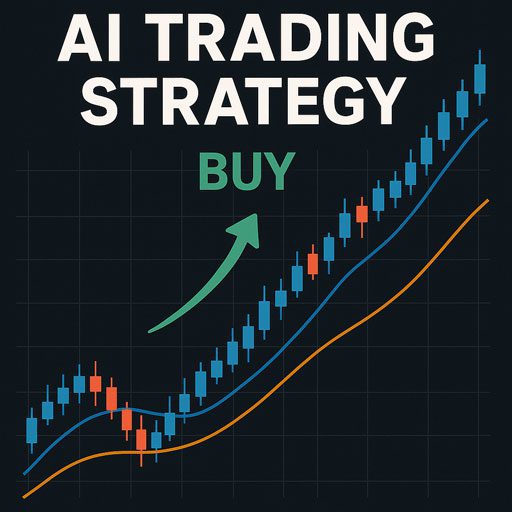
How AI-Coded Trading Strategies Actually Perform in NinjaTrader
Artificial intelligence has made real progress in generating usable code — but trading strategies are not just software problems.
They are risk systems that must survive changing market conditions, imperfect fills, platform quirks, and trader psychology.
To separate hype from reality, we tested ChatGPT by asking it to build a complex NinjaTrader 8 strategy with features commonly required
for live trading: moving average crossovers, limit entries, multiple profit targets, trailing stops, and strict execution rules.
The goal was not to see whether AI could produce compilable code, but whether it could replicate the depth, robustness,
and defensive logic an experienced NinjaTrader developer builds for real-world use.
Short Answer: AI Can Assist — But It Cannot Replace Strategy Design
In practice, AI-generated trading strategies can accelerate development, but they cannot replace human judgment, experience,
or responsibility. ChatGPT can assemble logical components, but it does not understand risk exposure, capital preservation,
or how strategies fail under stress.
Across real market conditions, the limitation is not code syntax — it is context. Markets shift regimes, execution is imperfect,
and small logic gaps compound into real losses. These are areas where AI currently struggles.
The Challenge
We prompted ChatGPT to write a NinjaScript strategy in C# that included the following real-world requirements:
- EMA crossover entries with price confirmation
- Limit orders to avoid market chasing
- One trade at a time, per direction, per bar
- Three profit targets, scaling out one-third of the position at each
- Initial stop loss plus trailing stop after Target 1
- Time filters and user-configurable inputs
- Optional use of unmanaged orders for precise control
At NinjaCode Solutions, we’ve built and tested NinjaTrader strategies across a wide range of market conditions,
and this challenge mirrors many of the assumptions traders make when first experimenting with automation.
What the AI Did Well
ChatGPT generated a complete strategy class with clearly organized code, user-adjustable parameters, and in-code comments
explaining each logical block. Specifically, it implemented:
- Structured EMA crossover logic with entry filtering
- Limit-based entries tied to bar closes
- Multi-target exit logic with position scaling
- A trailing stop that activated after the first profit target
- Basic logging for order and trade state tracking
It also demonstrated awareness of NinjaTrader concepts such as OCO groups and partial exits — something many novice
developers struggle with.
Where AI-Generated Strategies Break Down in Live Trading
Despite impressive output, several critical weaknesses emerged that would prevent this strategy from being deployed safely
in live markets without extensive rework:
- Partial fill handling was weak. The logic assumed full fills and did not dynamically adjust targets
when entry size was reduced. - Multi-target coordination was fragile, creating the risk of mismatched order quantities or unintended exposure.
- Trailing stop logic lacked precision, occasionally updating unnecessarily or misapplying behavior
across trade directions. - Platform-specific quirks were overlooked, including order expiration behavior and strict OCO ID requirements.
- No post-trade state resets, meaning leftover flags could corrupt subsequent trades.
While the strategy compiled and executed in testing, it lacked the defensive programming required for live deployment.
Why AI Struggles With Real Trading Logic
These shortcomings stem from a fundamental limitation: AI generates logic without execution feedback.
It does not experience slippage, rejected orders, partial fills, or capital drawdowns.
NinjaTrader’s order lifecycle — particularly when using unmanaged orders — demands defensive coding that only emerges
through real-world testing, failure analysis, and iteration.
As a result, AI-generated strategies often appear complete on the surface but lack the safeguards needed to survive
unpredictable market conditions.
What Automated Trading Software Cannot Do
No automated trading system — AI-generated or otherwise — can adapt perfectly to every market regime.
Automation does not eliminate drawdowns, prevent over-optimization, or guarantee consistent performance.
Logic that performs well in trending conditions may fail abruptly in choppy or transitioning markets.
This is why professional systems emphasize risk containment and failure modes as much as entries and exits.
Final Takeaways
For traders considering AI-assisted development, the key is understanding where automation ends and responsibility begins.
AI can be a powerful tool — but only when paired with experience, testing, and risk awareness.
- Use AI as a development accelerator, not a finished solution
- Backtest thoroughly and review every execution path line by line
- Break complex systems into smaller, testable components
This experiment highlights how far AI has come — and where human oversight remains essential.
Used correctly, tools like ChatGPT can become valuable assistants in the trading development process,
but they are not substitutes for expertise.


0 Comments